

Posts by Negan

    APT36 Targets Indian Government with Golang-Based DeskRAT Malware Campaign
    Transparent Tribe and allied APTs expand cross-platform malware attacks across South and East Asia in 2025.
    thehackernews.com

    A Pakistan-nexus threat actor has been observed targeting Indian government entities as part of spear-phishing attacks designed to deliver a Golang-based malware known as DeskRAT.

    The activity, observed in August and September 2025 by Sekoia, has been attributed to Transparent Tribe (aka APT36), a state-sponsored hacking group known to be active since at least 2013. It also builds upon a prior campaign disclosed by CYFIRMA in August 2025.

    Display Spoiler

    The attack chains involve sending phishing emails containing a ZIP file attachment, or in some cases, a link pointing to an archive hosted on legitimate cloud services like Google Drive. Present within the ZIP file is a malicious Desktop file embedding commands to display a decoy PDF ("CDS_Directive_Armed_Forces.pdf") using Mozilla Firefox while simultaneously executing the main payload.

    Both the artifacts are pulled from an external server "modgovindia[.]com" and executed. Like before, the campaign is designed to target BOSS (Bharat Operating System Solutions) Linux systems, with the remote access trojan capable of establishing command-and-control (C2) using WebSockets.

    The malware supports four different methods for persistence, including creating a systemd service, setting up a cron job, adding the malware to the Linux autostart directory ("$HOME/.config/autostart"), and configuring .bashrc to launch the trojan by means of a shell script written to the "$HOME/.config/system-backup/" directory.

    DeskRAT supports five different commands -

    • ping, to send a JSON message with the current timestamp, along with "pong" to the C2 server
    • heartbeat, to send a JSON message containing heartbeat_response and a timestamp
    • browse_files, to send directory listings
    • start_collection, to search and send files matching a predefined set of extensions and which are below 100 MB in size
    • upload_execute, to drop an additional Python, shell, or desktop payload and execute it

    "DeskRAT's C2 servers are named as stealth servers," the French cybersecurity company said. "In this context, a stealth server refers to a name server that does not appear in any publicly visible NS records for the associated domain."

    "While the initial campaigns leveraged legitimate cloud storage platforms such as Google Drive to distribute malicious payloads, TransparentTribe has now transitioned to using dedicated staging servers."

    The findings follow a report from QiAnXin XLab, which detailed the campaign's targeting of Windows endpoints with a Golang backdoor it tracks as StealthServer through phishing emails containing booby-trapped Desktop file attachments, suggesting a cross-platform focus.

    It's worth noting that StealthServer for Windows comes in three variants -

    • StealthServer Windows-V1 (Observed in July 2025), which employs several anti-analysis and anti-debug techniques to avoid detection; establishes persistence using scheduled tasks, a PowerShell script added to the Windows Startup folder, and Windows Registry changes; and uses TCP to communicate with the C2 server in order to enumerate files and upload/download specific files
    • StealthServer Windows-V2 (Observed in late August 2025), which adds new anti‑debug checks for tools like OllyDbg, x64dbg, and IDA, while keeping the functionality intact
    • StealthServer Windows-V3 (Observed in late August 2025), which uses WebSocket for communication and has the same functionality as DeskRAT

    XLab said it also observed two Linux variants of StealthServer, one of which is DeskRAT with support for an extra command called "welcome." The second Linux version, on the other hand, uses HTTP for C2 communications instead of WebSocket. It features three commands -

    • browse, to enumerate files under a specified directory
    • upload, to upload a specified file
    • execute, to execute a bash command

    It also recursively searches for files matching a set of extensions right from the root directory ("/") and then transmits them as it encounters them in an encrypted format via a HTTP POST request to "modgovindia[.]space:4000." This indicates the Linux variant could have been an earlier iteration of DeskRAT, since the latter features a dedicated "start_collection" command to exfiltrate files.

    "The group's operations are frequent and characterized by a wide variety of tools, numerous variants, and a high delivery cadence," QiAnXin XLab said.

    Attacks from Other South and East Asian Threat Clusters#

    The development comes amid the discovery of various campaigns orchestrated by South Asia-focused threat actors in recent weeks -

    • A phishing campaign undertaken by Bitter APT targeting government, electric power, and military sectors in China and Pakistan with malicious Microsoft Excel attachments or RAR archives that exploit CVE-2025-8088 to ultimately drop a C# implant named "cayote.log" that can gather system information and run arbitrary executables received from an attacker-controlled server.
    • A new wave of targeted activity undertaken by SideWinder targeting the maritime sector and other verticals in Pakistan, Sri Lanka, Bangladesh, Nepal, and Myanmar with credential-harvesting portals and weaponized lure documents that deliver multi-platform malware as part of a "concentrated" campaign codenamed Operation SouthNet.
    • An attack campaign undertaken by a Vietnam-aligned hacking group known as OceanLotus (aka APT-Q-31) that delivers the Havoc post-exploitation framework in attacks targeting enterprises and government departments in China and neighboring Southeast Asian countries.
    • An attack campaign undertaken by Mysterious Elephant (aka APT-K-47) in early 2025 that uses a combination of exploit kits, phishing emails, and malicious documents to gain initial access to target government entities and foreign affairs sectors in Pakistan, Afghanistan, Bangladesh, Nepal, India, and Sri Lanka using a PowerShell script that drops BabShell (a C++ reverse shell), which then launches MemLoader HidenDesk (a loader that executes a Remcos RAT payload in memory) and MemLoader Edge (another malicious loader that embeds VRat, a variant of the open-source RAT vxRat).

    Notably, these intrusions have also focused on exfiltrating WhatsApp communications from compromised hosts using a number of modules – viz., Uplo Exfiltrator and Stom Exfiltrator – that are devoted to capturing various files exchanged through the popular messaging platform.

    Another tool used by the threat actor is ChromeStealer Exfiltrator, which, as the name implies, is capable of harvesting cookies, tokens, and other sensitive information from Google Chrome, as well as siphon files related to WhatsApp.

    The disclosure paints a picture of a hacking group that has evolved beyond relying on tools from other threat actors into a sophisticated threat operation, wielding its own arsenal of custom malware. The adversary is known to share tactical overlaps with Origami Elephant, Confucius, and SideWinder, all of which are assessed to be operating with Indian interests in mind.

    "Mysterious Elephant is a highly sophisticated and active Advanced Persistent Threat group that poses a significant threat to government entities and foreign affairs sectors in the Asia-Pacific region," Kaspesky said. "The use of custom-made and open-source tools, such as BabShell and MemLoader, highlights their technical expertise and willingness to invest in developing advanced malware."


    Just watched this yesterday: Kubo and the Two Strings ( Plex channel )

    External Content youtu.be
    Content embedded from external sources will not be displayed without your consent.
    Through the activation of external content, you agree that personal data may be transferred to third party platforms. We have provided more information on this in our privacy policy.

    Good tale

    You ever watched :

    Ne-Zha ?

    External Content www.youtube.com
    Content embedded from external sources will not be displayed without your consent.
    Through the activation of external content, you agree that personal data may be transferred to third party platforms. We have provided more information on this in our privacy policy.

    and Ne-Zha 2 ?

    External Content www.youtube.com
    Content embedded from external sources will not be displayed without your consent.
    Through the activation of external content, you agree that personal data may be transferred to third party platforms. We have provided more information on this in our privacy policy.


    Both movies are amazing and so beautifully animated.

    Today, Microsoft introduced Mico, a new and more personal avatar for the AI-powered Copilot digital assistant, which the company describes as human-centered.

    Copilot Mico

    This new avatar is designed to be more supportive and empathetic, but will also push back when presented with incorrect information, "always respectfully."

    According to Microsoft, Mico also listens, learns, and "earns your trust," unlike the heavily parodied and criticized Clippy, the default Microsoft Office assistant for four years, or the Cortana Windows digital assistant, which Copilot replaced in September 2023.

    "This optional visual presence listens, reacts, and even changes colors to reflect your interactions, making voice conversations feel more natural. Mico shows support through animation and expressions, creating a friendly and engaging experience," Microsoft AI CEO Mustafa Suleyman said in a Thursday blog post.

    "Separately, explore conversation styles like real talk, which offers a collaborative model that challenges assumptions with care, adapts to your vibe, and helps conversations spark growth and connection."


    On Thursday, Suleyman also announced that the Copilot Fall Release introduces Copilot Groups, which allows up to 32 people to collaborate in real time within the same Copilot session.

    Copilot now also has long-term memory, enabling users to keep track of their thoughts and to-do lists, while the Memory & Personalization feature allows it to remember important details, such as appointments or anniversaries, for future interactions.

    The Deep Research Proactive Actions capability helps Copilot provide timely insights and suggest next steps based on your recent activities, and a new Learn Live feature will transform Copilot into a voice-enabled tutor that guides you through concepts using "questions, visual cues, and interactive whiteboards."

    Mico and the other new Copilot features introduced today are available for users in the United States. They are expected to roll out to more regions, such as Canada and the UK, over the coming weeks.

    One week ago, Microsoft rolled out the "Hey Copilot" wake word, an opt-in feature that allows users to talk to their Windows 11 computers, and also announced that Copilot can now generate Office documents and connect to Microsoft and third-party accounts, such as Gmail, Google Drive, and Google Calendar.

    As part of the same effort to expand Copilot's reach to more customers, Redmond enabled the Gaming Copilot "personal gaming sidekick" on Windows 11 PCs for users aged 18 or older and rolled out the content-aware Copilot Chat to Word, Excel, PowerPoint, Outlook, and OneNote for paying Microsoft 365 business customers.

    Microsoft says that the File Explorer (formerly Windows Explorer) now automatically blocks previews for files downloaded from the Internet to block credential theft attacks via malicious documents.

    The change is already live for users who have installed this month's Patch Tuesday security updates on Windows 11 and Windows Server systems.

    As Redmond explains in a support document published this Wednesday, the preview functionality will be disabled by default only for files viewed on an Internet Zone file share and those marked with the Mark of the Web (MotW), which shows that they've been downloaded using a web browser, received as email attachments, and obtained from other internet sources.

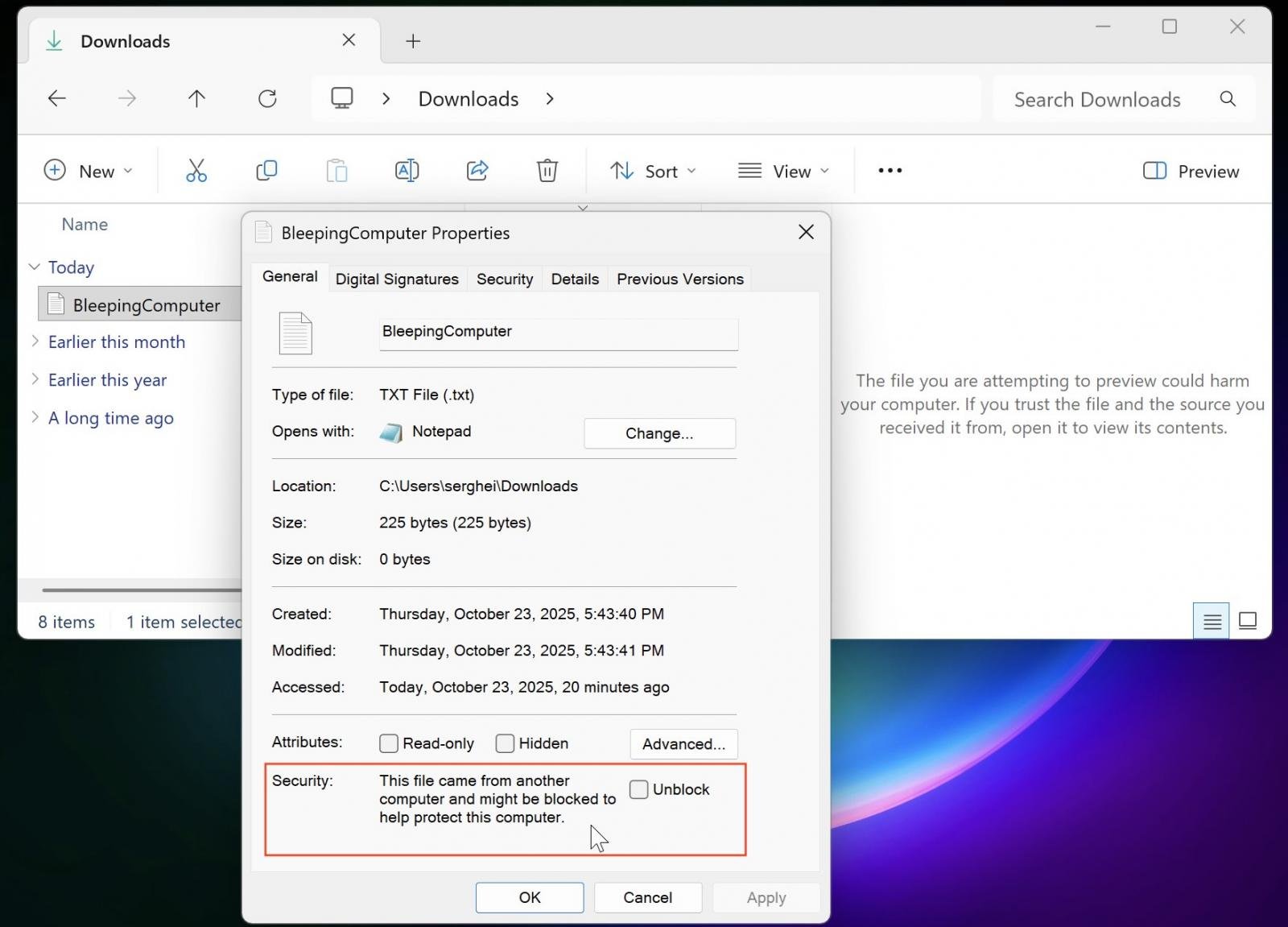
    When attempting to preview such files, the File Explorer preview pane will display a warning message saying "The file you are attempting to preview could harm your computer. If you trust the file and the source you received it from, open it to view its contents."

    After installing Windows security updates released after October 2025, this change will block threat actors from exploiting vulnerabilities that allow them to obtain NTLM hashes when users preview files containing HTML tags (such as <link>, <src>, and so on) that reference external paths on attacker-controlled servers.

    This attack vector is particularly concerning because it requires no user interaction beyond selecting a file to preview and removes the need to trick a target into actually opening or executing it on their system.

    File Explorer preview disabled for downloaded file

    "Starting with Windows security updates released on and after October 14, 2025, File Explorer automatically disables the preview feature for files downloaded from the internet," Microsoft says in a support document published this Wednesday.

    "This change is designed to enhance security by preventing a vulnerability that could leak NTLM hashes when users preview potentially unsafe files."

    For most users, no action is required since the protection is enabled automatically with the October 2025 security update, and existing workflows remain unaffected unless you regularly preview downloaded files.

    If you need to preview a trusted file from a known source, you can manually remove the Internet security block. To do that, right-click the file in File Explorer, select Properties, and click the "Unblock" button at the bottom of the General tab.

    However, it's important to note that this may not take effect immediately and could require signing out and signing back in.

    The preview block can also be removed for all files on an Internet Zone file share by using the Internet Options control panel's Security tab to add the file share’s address to the Trusted sites or the Local intranet security zone.

    Finished with Daryl Dixon - Season 1,2,3 now waiting for 4.

    Switched to :

    Walking Dead - Dead City, almost finished season 1

    External Content www.youtube.com
    Content embedded from external sources will not be displayed without your consent.
    Through the activation of external content, you agree that personal data may be transferred to third party platforms. We have provided more information on this in our privacy policy.

    Beware of one point though. If you choose to store your passwords locally. And decide to let other PC sync. There will have to be a port opening with a listening process that ought to be classified as a 'server' process. As any good sys admin will tell you, you don't decide a run a server on a whim.

    Mine are synced with an online personal cloud. Not stored with Enpass.

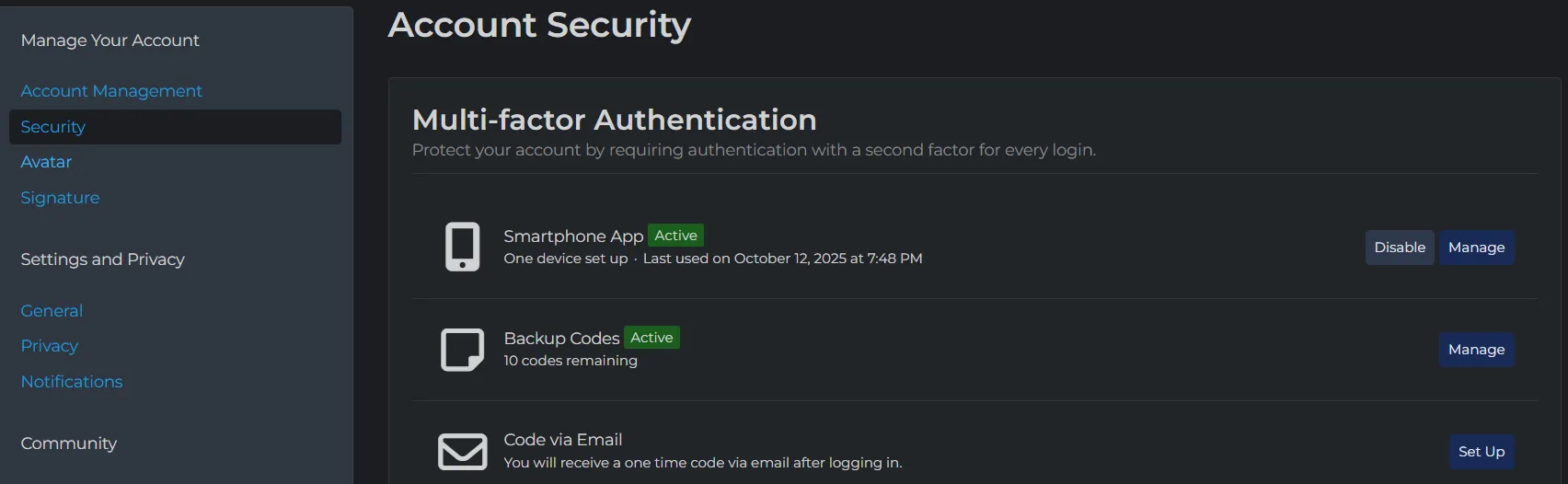
    Make sure you use a password manager and make sure no password is used twice. And MFA. At least this part is a bit protected.

    I recommend Enpass for Password Manager because you decide where to store your passwords database.
    Enpass does not store your passwords so they are no target to hackers.

    Enpass: Secure Passkey & Password Manager That Keeps Your Data On Your Cloud Storage
    With Enpass, choose where your passwords and passkeys are secured and synced – on your personal or business clouds (or even offline). Not on our servers
    www.enpass.io

    E-commerce security company Sansec has warned that threat actors have begun to exploit a recently disclosed security vulnerability in Adobe Commerce and Magento Open Source platforms, with more than 250 attack attempts recorded against multiple stores over the past 24 hours.

    The vulnerability in question is CVE-2025-54236 (CVSS score: 9.1), a critical improper input validation flaw that could be abused to take over customer accounts in Adobe Commerce through the Commerce REST API.

    Also known as SessionReaper, it was addressed by Adobe last month. A security researcher who goes by the name Blaklis is credited with the discovery and responsible disclosure of CVE-2025-54236.

    The Dutch company said that 62% of Magento stores remain vulnerable to the security flaw six weeks after public disclosure, urging website administrators to apply the patches as soon as possible before broader exploitation activity picks up.

    The attacks have originated from the following IP addresses, with unknown threat actors leveraging the flaw to drop PHP webshells or probe phpinfo to extract PHP configuration information.

    • 34.227.25[.]4
    • 44.212.43[.]34
    • 54.205.171[.]35
    • 155.117.84[.]134
    • 159.89.12[.]166

    "PHP backdoors are uploaded via '/customer/address_file/upload' as a fake session," Sansec said.

    The development comes as Searchlight Cyber published a detailed technical analysis of CVE-2025-54236, describing it as a nested deserialization flaw that enables remote code execution.

    It's worth noting that CVE-2025-54236 is the second deserialization vulnerability impacting Adobe Commerce and Magento platforms in as many years. In July 2024, another critical flaw dubbed CosmicSting (CVE-2024-34102, CVSS score: 9.8) was subjected to widespread exploitation.

    With proof-of-concept (PoC) exploits and additional specifics now entering public domains, it's imperative that users move quickly to apply the fixes.

    Over 250 Magento Stores Hit Overnight as Hackers Exploit New Adobe Commerce Flaw
    Sansec reports 250+ attacks exploiting Adobe Commerce flaw CVE-2025-54236; 62% of stores remain unpatched.
    thehackernews.com

    🚫 Cybertopix Forbidden Topics & Rules

    To maintain a healthy and respectful environment, the following behaviors and content are strictly forbidden on Cybertopix:

    🔒 General Conduct

    • No Spamming: Repeated, irrelevant, or disruptive messages are not allowed.
    • No Hate Speech or Discrimination: Any form of racism, sexism, homophobia, or other discriminatory behavior is strictly prohibited.
    • No Threats or Violence: Threatening language or inciting violence will result in immediate action.
    • No Cursing or Offensive Language: Keep language respectful and appropriate for all audiences.

    🤖 AI & Content Rules

    • No AI-Only Posting: While AI-generated content is welcome, it must be meaningful and not spammed. Human interaction is encouraged.
    • No Deepfakes or Misleading AI Creations: Do not use AI to impersonate others or spread false information.
    • No NSFW or Inappropriate AI Content: AI-generated adult or disturbing content is strictly forbidden.

    📢 Posting & Sharing

    • No Self-Promotion Without Permission: Advertising products, services, or social media accounts is not allowed unless approved.
    • No Piracy or Illegal Content: Sharing pirated software, media, or illegal materials is strictly prohibited.
    • No Misinformation: Do not spread false or misleading information, especially regarding health, safety, or legal matters.

    🛡️ Privacy & Safety

    • No Doxxing: Sharing personal information (yours or others’) without consent is strictly forbidden.
    • No Impersonation: Pretending to be someone else, including staff or public figures, is not allowed.

    ⚠️ Enforcement

    Violations of these rules may result in:

    • Warnings
    • Temporary or permanent bans
    Chinese Threat Actors Exploit ToolShell SharePoint Flaw Weeks After Microsoft's July Patch
    Chinese threat actors exploited a patched SharePoint flaw, CVE-2025-53770, in global espionage attacks.
    thehackernews.com

    Threat actors with ties to China exploited the ToolShell security vulnerability in Microsoft SharePoint to breach a telecommunications company in the Middle East after it was publicly disclosed and patched in July 2025.

    Also targeted were government departments in an African country, as well as government agencies in South America, a university in the U.S., as well as likely a state technology agency in an African country, a government department in the Middle East, and a finance company in a European country.

    According to Broadcom's Symantec Threat Hunter Team, the attacks involved the exploitation of CVE-2025-53770, a now-patched security flaw in on-premise SharePoint servers that could be used to bypass authentication and achieve remote code execution.

    CVE-2025-53770, assessed to be a patch bypass for CVE-2025-49704 and CVE-2025-49706, has been weaponized as a zero-day by three Chinese threat groups, including Linen Typhoon (aka Budworm), Violet Typhoon (aka Sheathminer), and Storm-2603, the latter of which is linked to the deployment of Warlock, LockBit, and Babuk ransomware families in recent months.

    However, the latest findings from Symantec indicate that a much wider range of Chinese threat actors have abused the vulnerability. This includes the Salt Typhoon (aka Glowworm) hacking group, which is said to have leveraged the ToolShell flaw to deploy tools like Zingdoor, ShadowPad, and KrustyLoader against the telecom entity and the two government bodies in Africa.

    KrustyLoader, first detailed by Synacktiv in January 2024, is a Rust-based loader previously put to use by a China-nexus espionage group dubbed UNC5221 in attacks exploiting flaws in Ivanti Endpoint Manager Mobile (EPMM) and SAP NetWeaver.

    The attacks aimed at government agencies in South America and a university in the U.S., on the other hand, involved the use of unspecified vulnerabilities to obtain initial access, followed by the exploitation of SQL servers and Apache HTTP servers running the Adobe ColdFusion software to deliver the malicious payloads using DLL side-loading techniques.

    In some of the incidents, the attackers have been observed executing an exploit for CVE-2021-36942 (aka PetitPotam) for privilege escalation and domain compromise, along with a number of readily available and living-off-the-land (LotL) tools to facilitate scanning, file download, and credential theft on the infected systems.

    "There is some overlap in the types of victims and some of the tools used between this activity and activity previously attributed to Glowworm," Symantec said. "However, we do not have sufficient evidence to conclusively attribute this activity to one specific group, though we can say that all evidence points to those behind it being China-based threat actors."

    "The activity carried out on targeted networks indicates that the attackers were interested in stealing credentials and in establishing persistent and stealthy access to victim networks, likely for the purpose of espionage."

    Trident I have noticed that McAfee has a hard time with some pages. I've mentioned this before, but it cannot open dnsleaktest.com, even when disabling the real time protection in Total Protection settings (no ability to disable Web Protection alone).

    And to get onto my router page to confirm my TP-Link/Archer firmware is up to date, I had to disable the AV protection the get the page to load. I was getting a non-https page can't be opened message. I've always had to disable any VPNs I was using to get to the login page, but is there any option so I don't have to disable a key protection in McAfee to access that webpage?

    Just test with Eset, i can open dnsleaktest.com, must be the extension or the program ? Trident

    I'm just wondering, when I test browser extensions on Phishtank at time in the past with F-Secure, and even now with Avast using Brave, there will be a slight flash of the red Brave/Chromium's warning page quickly overlaid with the Avast warning. At those times, are the AV browser extensions getting the phishing, webpage "information" from the browsers, Chromium's protection and then display their notice?

    In the past with F-Secure I think I've tried to disable the browsers protection to see if the AV extension would catch the page without the flash of the red screen being overlaid with F-Secure's warning, but it would still at those times load first (Brave's warning). With McAfee, that doesn't happen, it just shows its own warning (maybe quickly enough?).

    In going side by side on two different notebooks for about 35 minutes last night on Phishtank, one notebook with Avast, the other with McAfee, what at times one would miss, the other would pick up on. They were pretty much even in what they blocked. The advantage with McAfee it just displays the webpage warning, whereas Avast at times has the pop up along with the webpage warning which can at times get lost "behind" the webpage.

    Basically i never use Phishtank. My wife doesnt allow me to use her laptop for testing too ^^